Cat vomiting: what each color can mean and when to worry
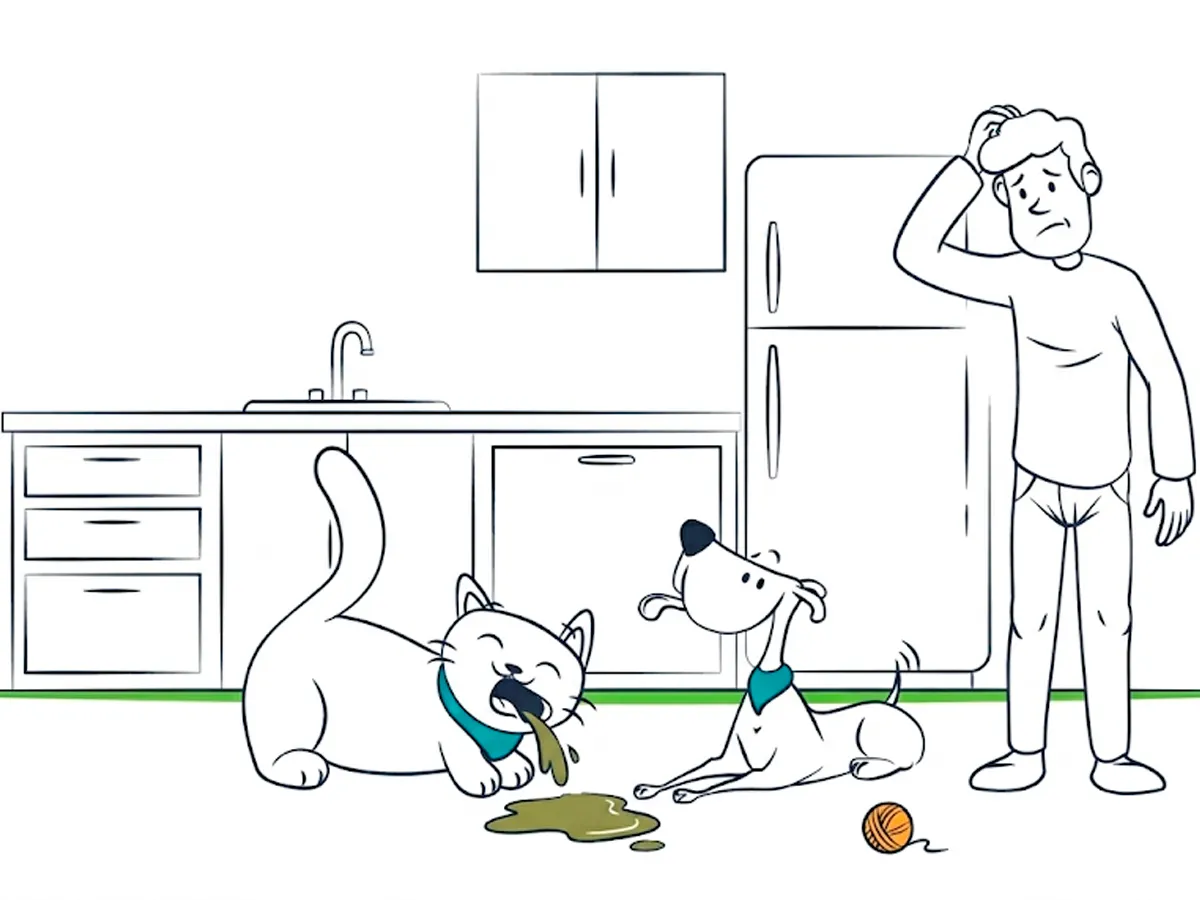
If you live with a cat, it has probably happened: everything is calm at home and suddenly you find vomit on the floor. The first thought is always, “Is this serious?”. The honest answer is: it depends. Some episodes are occasional (hairballs, eating too fast), while others can be a warning sign.
Here’s a practical guide to help you interpret the color and appearance, what you can safely do, and when it’s time to see a veterinarian.
Emergency warning signs (don’t wait)
See your vet (or emergency care) if any of these apply:
- Repeated vomiting in a short time, or inability to keep water down.
- Lethargy, breathing difficulty, obvious pain, or a “tight” abdomen.
- Vomit with blood (bright red or a “coffee grounds” look).
- Suspected foreign body (string, thread, toys) or toxin exposure.
- Your cat is a kitten, a senior, or has a chronic condition.
If you’re unsure, call your clinic and describe exactly what you’re seeing. It helps more than you think.
Clear vomit or white foam
This is often linked to stomach irritation or “empty” vomiting. It can happen if they’ve gone a long time without eating, or with mild nausea.
What to do:
- Check for other symptoms (diarrhea, low appetite, lethargy).
- Watch whether it happens again the same day.
If it’s a one‑off and your cat is otherwise normal, monitoring may be enough. If it repeats, contact your vet.
Yellow vomit (bile)
Bile usually looks like a yellow liquid. It can show up with stomach irritation, longer fasting periods, or digestive issues.
What to do:
- Monitor hydration and appetite.
- Avoid sudden food changes.
If it repeats or comes with lethargy, don’t ignore it.
Dark brown vomit or “coffee grounds”
This appearance can indicate digested blood (not always, but it’s an important possibility). It’s not a situation for home trial‑and‑error.
What to do:
- Contact your veterinarian as soon as possible and describe the look.
Red vomit (fresh blood)
It can happen with irritation, ulcers, or more serious problems. Sometimes a small tear from retching is the cause, but it shouldn’t be normalized.
What to do:
- Speak with your vet, especially if there are multiple episodes or your cat seems unwell.
Hairballs: normal or a sign?
Occasional hairballs can happen, especially in long‑haired cats or during shedding seasons. But if it’s frequent, it’s worth checking:
- Not enough brushing, or over‑grooming due to stress.
- Underlying digestive inflammation or irritation.
If you want to prevent and track episodes, Miwuki Pet Life makes it easier to log patterns and care routines: download it here.
What you can do at home (if there are NO warning signs)
- Offer fresh water and see if they tolerate it.
- Keep things calm and low‑stress.
- Note frequency, time, appearance, and whether there’s diarrhea or appetite loss.
Avoid medicating on your own. Some human drugs can be dangerous for cats.
When veterinary insurance really helps
With repeated vomiting, suspected foreign bodies, or diagnostic tests, a vet visit is often unavoidable. For these surprises, consider Miwuki’s veterinary insurance: pet insurance.
If you also want prevention and routine tips, you can read our guide on caring for orphan kittens.
Conclusion
Vomit color can give clues, but context matters most: how often it happens, whether your cat acts normal, and whether they can stay hydrated. If you notice warning signs, consult a professional—it’s the safest call.
Sources
- Cornell Feline Health Center: https://www.vet.cornell.edu/departments-centers-and-institutes/cornell-feline-health-center
- Merck Veterinary Manual: https://www.merckvetmanual.com/
- AVMA (health & wellbeing): https://www.avma.org/